
Best Low-Angle Block Planes Compared for 2026: 5 Top Picks
Best low angle block planes compared for 2026: five No. 60-1/2 style picks for end grain, chamfers and trimming. Read the comparison and choose yours.
Five No. 60-1/2 style block planes compared on mouth, blade and body so you can pick the right one for end grain and trimming
A low-angle block plane is the small plane you reach for when a cut has to be clean and quick: shaving end grain on a box lid, easing a chamfer along an edge, or trimming a joint until it closes without a gap. Choosing one comes down to a handful of practical points.
This comparison looks at the bed angle and how it handles end grain, the adjustable mouth and how finely it can be set, the blade steel and thickness, and the weight and body material that keep the plane steady through the cut.
Below you will find five No. 60-1/2 style planes set side by side, each with a short overview, the kind of work it suits best, who should look elsewhere, and a final recommendation, followed by answers to common questions about setting up and using these planes.
| Product | Amazon rating | Best for | Link |
|---|---|---|---|
| STANLEY Bailey No. 60-1/2 Low Angle Block Plane 12-139 ★ | ★ 4.4/5 (430) | End grain and general trimming | View → |
| JORGENSEN No. 60-1/2 Low Angle Block Plane | ★ 4.7/5 (624) | Classic layout, simple setup | View → |
| WoodRiver Low Angle Block Plane with Adjustable Mouth | ★ 4.5/5 (150) | Wider blade, longer sole | View → |
| Rockler Bench Dog No. 60-1/2 Low Angle Block Plane | ★ 4.4/5 (55) | Heavier feel, spare blade available | View → |
| Faithfull No. 60 Low Angle Block Plane 6012 in Wooden Box | ★ 4.3/5 (395) | Gift-ready boxed plane | View → |
STANLEY Bailey No. 60-1/2 Low Angle Block Plane 12-139
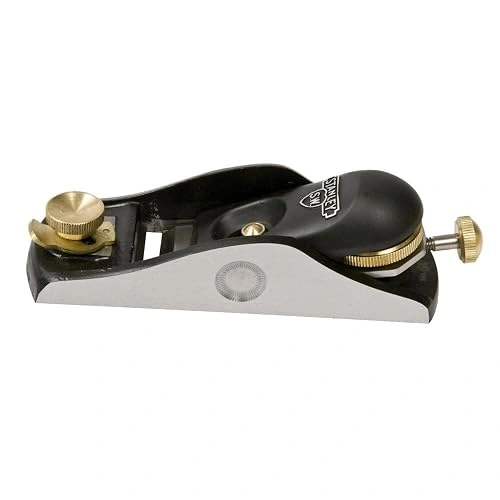
The Stanley Bailey No. 60-1/2 12-139 is the classic pattern that the other planes here follow. The ductile iron body is about 6-1/2 inches long and 2-1/8 inches wide, and it weighs roughly 2 pounds, which gives it enough mass to carry a cut across end grain smoothly.
The iron is 1/8 inch thick A2 steel sitting on a 12 degree bed, and the adjustable mouth lets you close the opening for fine shavings or open it for heavier cuts. A replacement iron is sold under part 12-143, so the plane can stay in service for years as the original blade wears down.
JORGENSEN No. 60-1/2 Low Angle Block Plane
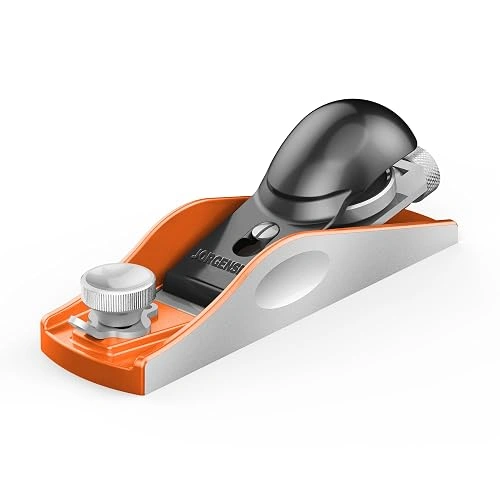
The Jorgensen No. 60-1/2 follows the familiar Stanley-style layout, with a ductile iron body about 6.3 inches (160 mm) long, a depth adjustment screw and an adjustable mouth. It is a straightforward design that suits anyone who wants the classic low-angle block plane format.
Its blade is 1/8 inch thick O1 steel ground at 25 degrees and seated on a 12 degree bed, which results in a low cutting angle of about 37 degrees. O1 is a steel many woodworkers like because it takes a sharp edge readily on ordinary sharpening stones, so touching up the edge is easy.
WoodRiver Low Angle Block Plane with Adjustable Mouth
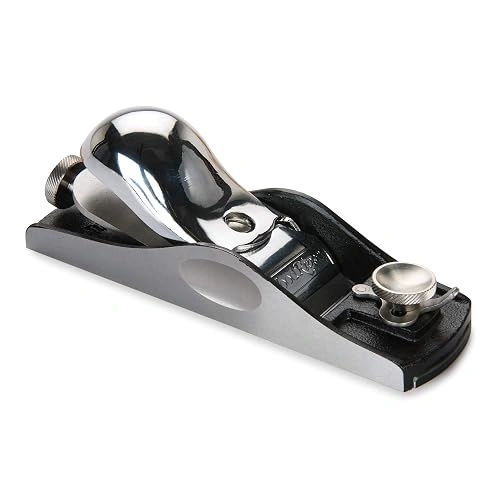
The WoodRiver Low Angle Block Plane with Adjustable Mouth is the longest plane in this group, measuring 7 inches in length and 2 inches in width. The body is stress-relieved ductile iron that is precision machined to be flat and square, which gives you a dependable reference surface for trimming joints.
The blade is 1-5/8 inches wide and 0.125 inch thick, made of high carbon tool steel hardened to Rc 60-64 and ground to a 25 degree bevel, all on a 12 degree bed. The adjustable mouth runs smoothly and locks in place, so you can go from coarse cuts to very fine shavings.
Rockler Bench Dog No. 60-1/2 Low Angle Block Plane
The Rockler Bench Dog No. 60-1/2 is a Stanley-pattern low-angle plane with an adjustable mouth, a sole about 6-1/4 inches long and 1-5/8 inches wide, and a weight of around 2.2 pounds. That bit of extra heft helps it stay settled while you pare end grain or knock the corner off an edge.
The blade is about 1/8 inch thick, 1-3/8 inches wide and hardened to 55-60 HRC, with a 25 degree bevel. Rockler also sells a spare blade for this plane, so you can keep a second sharpened iron ready and swap it in when the first one needs honing.
Faithfull No. 60 Low Angle Block Plane 6012 in Wooden Box
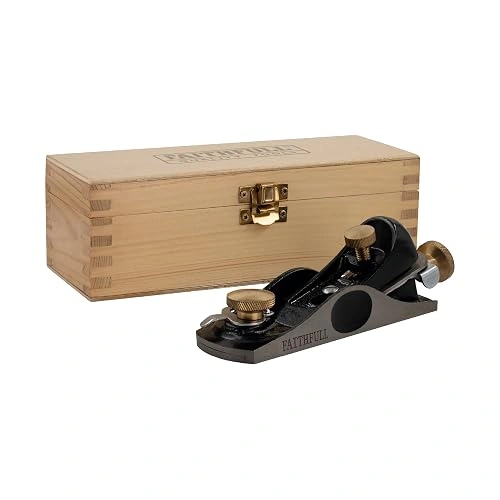
The Faithfull No. 60 6012 is a bevel-down low-angle block plane with a cast iron body, about 160 mm long, and a high carbon steel blade. It has separate vertical and lateral adjustment, so you can set the depth of cut and square the edge to the sole without tapping the blade.
The cutter is 35 mm wide and set at 13.5 degrees, and the mouth is fully adjustable from wide for coarse work to narrow for fine shavings on awkward grain. The plane arrives in a hinged wooden box, which makes it a tidy way to store the plane or give it as a gift.
Conclusions
The Stanley Bailey No. 60-1/2 12-139 is the safest all-round choice. Its ductile iron body, 1/8 inch A2 iron and 12 degree bed make it a capable end grain and chamfer plane, and the original pattern means replacement irons are easy to source. … read more
The Jorgensen No. 60-1/2 is a good fit if you want the classic Stanley-style layout with an O1 steel blade. Its 12 degree bed and 25 degree bevel handle end grain and trimming, and the O1 iron is straightforward to resharpen. … read more
The WoodRiver Low Angle Block Plane with Adjustable Mouth suits woodworkers who like a longer sole and a 1-5/8 inch blade. The hardened high carbon steel iron and smooth, locking mouth make it a solid pick for fitting joints and trimming. … read more
The Rockler Bench Dog No. 60-1/2 is worth a look if you prefer a plane with some extra weight and a ready source of spare blades. The 55-60 HRC iron and adjustable mouth cover end grain, chamfers and general trimming comfortably. … read more
The Faithfull No. 60 6012 in Wooden Box works well for someone who values a presentation box and separate lateral adjustment. Its 13.5 degree iron and fully adjustable mouth handle end grain and fine shavings, and the box doubles as storage. … read more
Frequently Asked Questions
What is a low-angle block plane best used for?
A low-angle block plane is mainly used for trimming end grain, cutting small chamfers, fitting joints and drawers, and taking fine shavings off edges. The low bed angle lets the blade slice through end grain fibers cleanly with one hand.
Why does the adjustable mouth matter on a block plane?
The mouth is the opening in front of the blade. Closing it up supports the wood fibers right at the edge and helps prevent tearout when you take very fine shavings, while opening it lets thicker shavings pass through without clogging.
How do I sharpen the blade on a block plane?
Hone the bevel on a sharpening stone or fine abrasive, keeping the angle steady, then polish the flat back of the blade. A light stropping at the end helps. Replace or regrind the blade only when nicks are too deep to hone out.
How should I hold and push a low-angle block plane?
Rest the palm of your hand on the rear of the plane with your fingers wrapped around the sides, and put your thumb or fingertip on the front. Push with a steady stroke along the grain, and plane end grain from the edge toward the middle, or support the far corner to avoid splitting.
Can I use a block plane on end grain without a vise?
You can, but it works best when the board is firmly clamped or held in a vise, because a moving workpiece makes it hard to keep an even, light cut. Clamp the piece with a backing block behind it to stop the far edge from breaking out.