Best Earmuffs for Loud Workshops Compared for 2026: 5 Picks
Best passive hearing protection earmuffs compared for saws, grinders and compressors: 5 picks by fit and features. See which pair suits your shop.
Five passive earmuffs compared on headband style, cushions and fit so you can choose a pair for saws, grinders, compressors and mowers
Table saws, angle grinders, air compressors and mowers all produce the kind of sustained racket that makes a pair of earmuffs part of the basic kit, right next to safety glasses and gloves. Passive earmuffs need no batteries, have nothing to charge and are easy to hang on a hook by the door.
This comparison looks at five passive models using criteria that matter in a working shop. First is headband style, since over-the-head and behind-the-head designs sit differently with hard hats, hoods and long sessions. Second is cushion and cup construction, which affects comfort and seal. Third is visibility and care, such as bright colors and replaceable parts.
Each entry explains what the muff is, who it suits and who should look elsewhere. Keep in mind that a noise reduction rating is a lab figure, and real-world protection depends on how well the cups seal against your head.
| Product | Amazon rating | Best for | Link |
|---|---|---|---|
| 3M Peltor X5A Over-the-Head Earmuffs X5A/37274(AAD) ★ | ★ 4.6/5 (3,464) | All-round shop and jobsite use | View → |
| 3M PELTOR Optime 105 Hi-Viz Green Over-the-Head Earmuffs | ★ 4.6/5 (51) | Loud, long-duration machine noise | View → |
| Howard Leight VeriShield VS130HV Hi-Viz Yellow Over-The-Head Earmuff | ★ 4.5/5 (38) | Lighter, high-visibility daily wear | View → |
| Honeywell Howard Leight VeriShield VS110 Adjustable Headband Earmuffs | ★ 4.6/5 (35) | Spare pair, moderate noise | View → |
| 3M PELTOR Optime 95 Behind-the-Head Earmuffs with Adjustable Earcups | ★ 4.6/5 (1,169) | Wearing under hard hats | View → |
3M Peltor X5A Over-the-Head Earmuffs X5A/37274(AAD)
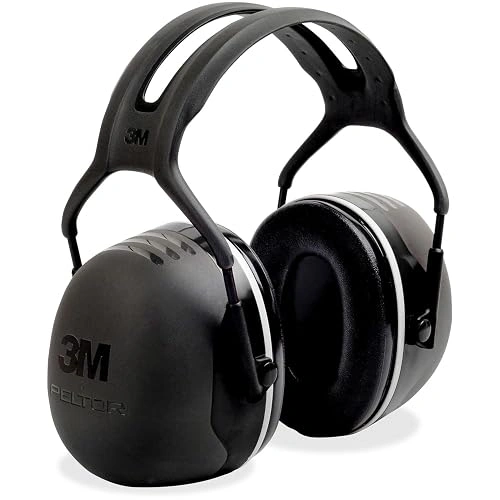
The Peltor X5A is an over-the-head passive earmuff from the 3M X Series, and it is a strong all-round choice for general workshop and jobsite use. It is built as a straightforward, no-electronics design with foam-filled ear cushions and a padded headband, so it can sit on a peg and be ready whenever a saw or grinder starts up.
Retailers describe the cups as a larger, deeper style intended for use around high noise levels, and the cushions and foam liners can be refreshed with the 3M hygiene kit made for this series, which helps if a pair gets heavy daily use. The X5A is also compatible with the 3M fit validation system used by safety teams, though most home shops will simply rely on a careful fit check.
Buyers often mention that it feels secure on the head and works for long sessions with a planer, router or chainsaw. As with every muff here, the noise reduction rating is a lab measurement, and the real result depends on a clean seal over the ears, with no hair, glasses arms or caps breaking the cushion contact.
3M PELTOR Optime 105 Hi-Viz Green Over-the-Head Earmuffs
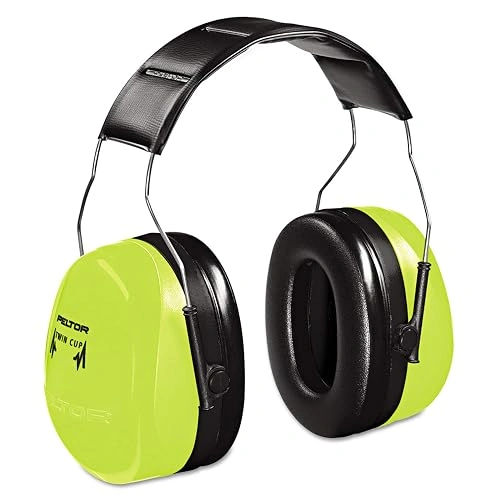
The Optime 105 sits in the higher-attenuation tier of the 3M passive range, and this version comes in a hi-viz green that is easy to spot when you set it down on a cluttered bench or work site. It uses an over-the-head band made of stainless steel, which 3M describes as resisting bending and warping, along with soft foam-filled cushions.
The cups use a double shell design, an approach meant to boost noise blocking, and 3M positions the Optime 105 for noise exposures up to 105 dBA as a guideline for the maximum time-weighted average. That makes it a natural match for someone who spends long stretches near a compressor, a stationary sander, or a gas-powered mower or trimmer.
The cups are a bit larger than the entry-level models, so some users find them bulkier in tight spaces, and buyers often mention that the bright color is helpful on shared sites. It is compatible with the 3M fit validation system, and like every rating, the lab number only tells part of the story, since fit decides much of what you actually get.
Howard Leight VeriShield VS130HV Hi-Viz Yellow Over-The-Head Earmuff
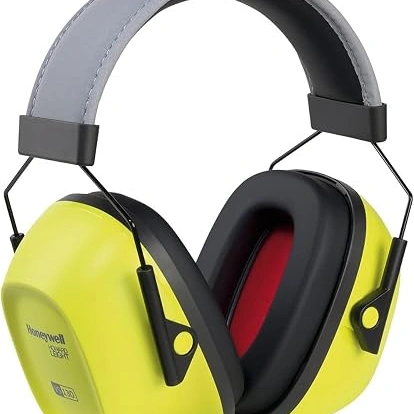
The VeriShield VS130HV is a passive over-the-head earmuff from Honeywell’s Howard Leight line, finished in hi-viz yellow. It comes from the VeriShield 100 Series, which Honeywell describes as having lighter cups with an internal baffle design and softer memory foam cushions meant to reduce squeezing pressure on the head.
The padded headband and bright color suit people who move between a shop and an outdoor site, because the muffs are easy to see when you take them off and set them down. The series cups are molded from ABS, and the cushions can be replaced with a dedicated hygiene kit, which matters when sweat and dust wear down the foam over a season.
Buyers often mention that these feel lighter than traditional bulky cups, which is welcome during a long day of sanding, sawing or running a leaf blower. Remember that the noise reduction rating on any earmuff is a laboratory figure, and getting a tight seal around your ears is what determines how much it helps in a real shop.
Honeywell Howard Leight VeriShield VS110 Adjustable Headband Earmuffs
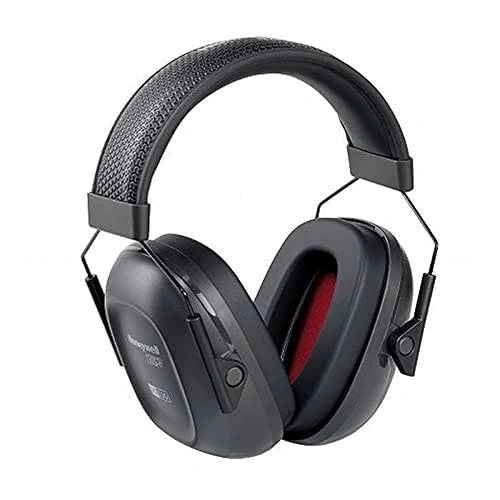
The VS110 is the entry model in the VeriShield 100 Series, a traditional-style passive earmuff with an adjustable, cushioned headband. It uses the same lighter cups and memory foam cushion approach that Honeywell describes for the series, but in a plain package aimed at moderate shop noise such as a drill press, handheld sander or a small compressor.
The headband adjusts to a range of head sizes, and the cups can be fitted with replacement cushions, so the muff can be kept in service rather than thrown out when the foam wears thin. For a toolbox or truck seat, the design is simple and easy to pull on and off between tasks.
Buyers often mention that it is comfortable and light enough for extended wear, and it is a sensible spare pair to keep for visitors or helpers. Because it is positioned as a lower-attenuation model, someone running a chainsaw, a rotary hammer or a big dust collector all day may want to look at a higher-tier muff. As always, the lab noise rating does not guarantee a result, and the cups must seal against your head.
3M PELTOR Optime 95 Behind-the-Head Earmuffs with Adjustable Earcups
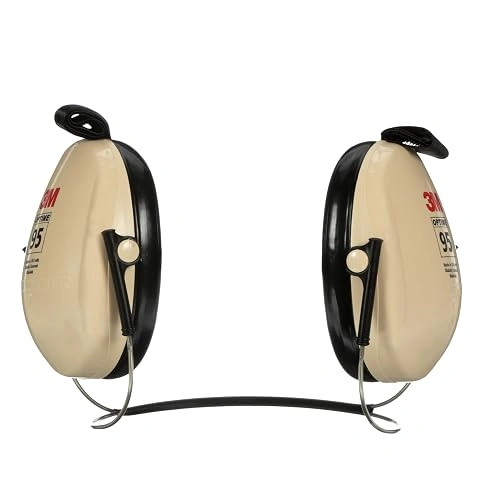
The Optime 95 is a behind-the-head passive earmuff, which means the band wraps around the back of the skull instead of crossing the top. That layout is the main reason to choose it, because it works when you wear a hard hat, welding hood, or a cap and need nothing pressing on the crown of your head.
3M rates this series for noise levels up to 95 dBA, so it is aimed at lighter noise sources such as a shop vacuum, a drill, or a mower and trimmer used for short spells, not for the loudest cutting and grinding work. The earcups are adjustable and pivot to tilt into position, which helps the cushions sit flat against the head.
Buyers often mention that the slim cups and low profile make it easy to wear with other gear. Because the band style changes how the muffs press on the head, take a moment to check the seal and any pressure points, and keep in mind that the noise rating is a lab figure that real-world fit can change.
Conclusions
Choose the 3M Peltor X5A if you want a dependable, battery-free over-the-head muff for general shop work. It has foam-filled cushions, replaceable hygiene parts and a design that is easy to hang by the door, which is why it leads this group. … read more
The 3M PELTOR Optime 105 Hi-Viz Green is the pick for people who spend hours near loud machines. Its double shell cups, stainless steel band and 105 dBA guideline suit compressors, big sanders and outdoor power equipment, with a bright color to find it quickly. … read more
The Howard Leight VeriShield VS130HV is a good fit if you want a lighter over-the-head muff in hi-viz yellow. Its memory foam cushions and baffled cups are meant for comfort across a long day moving between a shop and a site. … read more
The Honeywell Howard Leight VeriShield VS110 works best as an affordable-feeling spare for moderate noise. It has an adjustable cushioned headband and replaceable cushions, but heavy, all-day machinery use calls for a higher-tier model. … read more
The 3M PELTOR Optime 95 Behind-the-Head earmuff is the one to buy if you need to wear a hard hat or hood. The band sits behind the head, and the adjustable earcups tilt for fit, though it is meant for lighter noise levels. … read more
Frequently Asked Questions
What does the NRR number on earmuffs actually mean?
NRR stands for noise reduction rating and is a figure measured under laboratory conditions. Real-world protection depends on how well the cups seal against your head, so glasses arms, hair and hats can change the result. Check the fit each time you put them on.
Should I choose over-the-head or behind-the-head earmuffs?
Over-the-head bands are the most common and spread pressure across the crown. Behind-the-head bands are useful when you wear a hard hat, hood or cap that would get in the way of a top band. Try the style that sits comfortably with your other gear.
Can I wear earmuffs with safety glasses?
Yes, but the glasses arms can break the cushion seal against the head. Thin, flat arms generally work better than thick ones. Settle the cushions firmly around the ears after putting on your glasses and check that nothing sits between the cushion and your skin.
How do I keep passive earmuff cushions in good shape?
Wipe the cushions with a mild cleaner and avoid harsh solvents. Replace the foam liners and cushions with the maker's hygiene kit when they harden, crack or flatten, since a worn cushion seals poorly. Store the muffs away from heat and direct sun.
Are passive earmuffs better than electronic ones for a workshop?
Passive muffs have no electronics, so there are no batteries to replace, and they are simple and durable. Electronic models add features such as sound amplification, which some people like for talking with coworkers. If you only need basic noise reduction, passive is a sensible choice.